

How Healthcare Company Used AI to Manage 3000 Devices and Cut Costs
More than 3,000 mobile devices were in constant use across the healthcare environment, supporting everything from patient coordination to clinical communication. While mobility was deeply embedded in daily operations, it had evolved without a clear system to manage it.
Over time, this created gaps. Device activity, usage, and costs operated independently rather than as part of a unified structure. What should have been a controlled operational layer became difficult to track, harder to optimize, and increasingly expensive to sustain.
The Challenge: Multi-Carrier Chaos Meets Exploding Data Usage
The issue was not visibility alone. It was ownership.
Mobility existed everywhere across departments, carriers, and workflows, but no one system or team truly controlled it end to end. Costs increased steadily, yet no single source could explain why.
Invoices were approved because they had to be. Device counts were estimated, not verified. Plans were assigned once and rarely revisited.
Over time, three realities became clear:
- Spend was rising faster than device growth
- Data usage patterns did not match plan allocations
- IT was maintaining mobility, not managing it
Mobility had become an operational blind spot embedded inside critical healthcare workflows.
We weren’t managing mobility. Mobility was managing us.
Chief Technology Officer, Leading Contracting Firm
Core Mobility Pain Points



Those symptoms signaled rising enterprise risk. Without unified visibility, efficiency stalled and mobility optimization lagged behind business growth.
The Solution: Automated Plan Changes and Compliance Alignment
The first step was not optimization. It was accountability.
Solve(X) introduced a system where every device, every line, and every cost had a defined place and purpose. Instead of pulling data from multiple disconnected sources, the organization operated from a single, continuously updated foundation.
This shift changed how mobility was understood:
- Devices were tied to users and roles
- Usage patterns became measurable and consistent
- Billing data aligned with actual activity
For the first time, mobility could be governed, not just maintained.
Once the environment was structured, optimization became precise.
Solve(X) did not rely on periodic reviews or manual corrections. It operated continuously.
- SmartOps adjusted plans dynamically as usage changed
- OneSync ensured all systems reflected the same accurate data
- Policy controls enforced compliance without adding operational burden
What previously required intervention became part of the system itself.
Instead of reacting to issues, the organization prevented them.
The Result: Driving Compliance, Efficiency, and Cost Control
With control established, the impact was immediate and sustained.
- $85,000 eliminated from monthly cellular spend
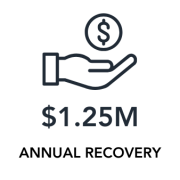
- $1M+ in annual savings driven by continuous optimization
- $300,000 captured immediately from correcting inefficiencies
- 3,000+ devices fully accounted for and aligned
Beyond cost, the organization gained operational stability.
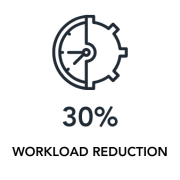
Audits became faster and simpler. Plan decisions were no longer debated. IT resources shifted away from administrative tasks toward higher-value initiatives.
Mobility moved from an uncontrolled expense to a governed system with measurable outcomes.
Solve(X) gave us confidence to make smarter, faster decisions.
Chief Technology Officer, Leading Contracting Firm
Solve(X) Impact
The technology layer mattered, but the real transformation was structural.
Before Solve(X):
- Mobility operated as a fragmented function
- Costs lacked clear ownership
- Decisions were based on incomplete data
After Solve(X):
- Mobility became a managed system with accountability
- Costs were tied directly to usage and continuously optimized
- Decisions were driven by real-time, validated data
This is the difference between having mobility and controlling it.
Mobility does not need to be replaced to be improved.
It needs to be organized, aligned, and continuously optimized.
That is how healthcare organizations reduce cost, improve control, and support critical operations without adding complexity.

Ready to Take Control of Your Mobility Environment?
With Solve(X), financial institutions and enterprise organizations can unlock data, reduce spend, and gain operational confidence without disruption.
Let’s turn mobility from a cost center into a strategic advantage.