How a Food Manufacturer Centralized Mobility Management & Saved Over $200,000 Annually
Industry: Food Manufacturing
Mobile Fleet: 3,200 Devices
Monthly Overspend: $17,000
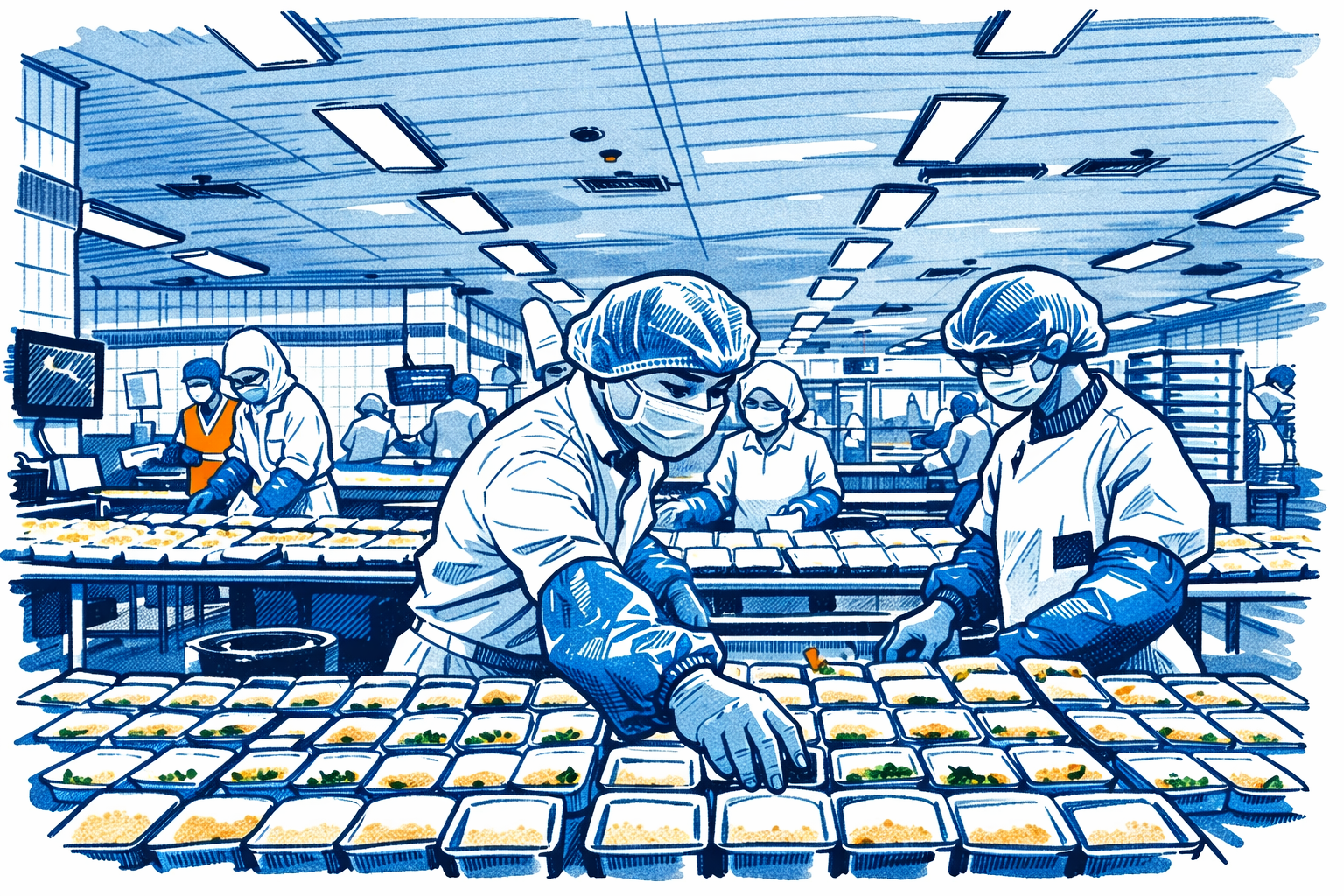
Inside this food manufacturing company’s production facilities, mobility had quietly become part of the operational backbone. Across the production floor, 3,200 mobile devices enabled quality inspections, compliance documentation, equipment monitoring, and coordination between shift teams.
Over time, however, the systems used to track those devices failed to keep up with how they were actually being used. Devices moved between teams and users, lines stayed active after roles changed, and the information stored internally often differed from what appeared in the carrier portal.
These inconsistencies began creating confusion around device ownership, active services, and carrier billing. With mobility directly tied to quality checks and production workflows, the company recognized that these gaps could no longer be managed through existing processes and started looking for a more reliable way to govern its mobile environment.
The Challenge: The Breaking Point Between Operations and Visibility
Before partnering with GoExceed, the company’s mobility environment had evolved organically as production operations expanded.
Mobility information was distributed across several platforms and internal records, each capturing only part of the environment. Without a centralized view, IT teams had to piece together device status, usage, and billing details from multiple sources, including carrier portal, MDM and internal spreadsheets. As discrepancies grew, routine tasks began requiring time-consuming manual coordination. IT teams regularly compared multiple records just to determine which lines were active and whether charges reflected actual usage.
To better understand the situation, GoExceed performed an initial mobility data analysis across carrier billing, device inventories, and usage patterns, uncovering issues that were not immediately visible.
Inactive lines were still generating charges, several rate plans no longer matched real usage patterns, and device assignments had drifted from the records used to track them. These findings revealed that the challenge extended beyond billing discrepancies. Disconnected oversight and manual processes were quietly increasing costs while placing additional strain on the IT team responsible for managing mobility.
We couldn’t track what was active, who had it, or what we were paying
VP of IT Operations, Food Manufacturing Company
Core Mobility Pain Points


Those symptoms signaled rising enterprise risk. Without unified visibility, efficiency stalled and mobility optimization lagged behind business growth.
The Solution: Bringing Structure and Control to a Scaled Mobility Environment
Following the initial analysis, the company’s IT leadership moved forward with Solve(X) to address the visibility gaps and operational inefficiencies identified across its mobility environment. The objective was not to replace existing systems, but to unify them into a single framework that could deliver consistent oversight, control, and automation.
Solve(X) connected carrier data, device records, and usage activity into one centralized view, eliminating the need to validate information across multiple systems. Device status, assignments, and lifecycle updates were aligned in real time, allowing IT teams to understand the state of the environment without manual verification.
Rather than continuing reactive troubleshooting, mobility operations became structured and governed through a single platform.
Three core solutions established this foundation:
Smart Optimization
analyzed billing and usage
to identify unused lines,
misaligned plans, and
ongoing charges, reducing
cost leakage.
OneSync automated moves, adds, changes, and disconnects,
simplifying carrier workflows
and reducing manual effort.
Smart Asset Management centralized device tracking
across deployment and repair,
providing visibility into
active and assigned devices.
Together, these solutions introduced a more controlled and consistent approach to mobility management. What had previously required manual coordination across systems became automated and measurable, enabling IT teams to manage mobility with greater accuracy and less effort.
With Solve(X) in place, mobility shifted into a structured operational model with clear visibility across the organization, supporting production needs without adding complexity or administrative burden.
The Result: From Uncertainty to Operational Confidence
Once Solve(X) was deployed, the company gained real-time visibility into its mobility environment. What previously required manual validation became immediately clear, enabling IT and operations teams to act with confidence.
With billing, usage, and device data aligned, hidden issues were identified early. Unused lines and billing inefficiencies were automatically corrected, generating $204,000 in annual savings and preventing future discrepancies.
Centralized device tracking improved equipment management across the factory floor. Teams could quickly see which devices were active, assigned, or available, reducing delays and keeping operations running smoothly.
Automation stabilized daily operations. Carrier changes and routine workflows no longer required manual effort, helping IT recover 60+ hours per month while achieving 80% process automation.
Mobility shifted from an ongoing operational burden to a structured, reliable capability, supporting production without added complexity.
Mobility is no longer guesswork. It is fully controlled and reliable.
VP of IT Operations, Food Manufacturing Company
Solve(X) Impact


Ready to Take Control of Your Mobility Environment?
With Solve(X), financial institutions and enterprise organizations can unlock data, reduce spend, and gain operational confidence without disruption.
Let’s turn mobility from a cost center into a strategic advantage.